
Great Performances at the Met: Andrea Chénier
Season 53 Episode 22 | 2h 22m 3sVideo has Closed Captions
Giordano’s tragedy stars tenor Piotr Beczała.
Giordano’s tragedy stars tenor Piotr Beczała as the virtuous poet who falls victim to the intrigue and violence of the French Revolution. Soprano Sonya Yoncheva stars as Chénier’s aristocratic lover, Maddalena di Coigny, with baritone Igor Golovatenko as Carlo Gérard. Daniele Rustioni takes the podium to lead Nicolas Joël’s staging.
Problems playing video? | Closed Captioning Feedback
Problems playing video? | Closed Captioning Feedback
Major series funding for GREAT PERFORMANCES is provided by The Joseph & Robert Cornell Memorial Foundation, the Anna-Maria and Stephen Kellen Arts Fund, the LuEsther T. Mertz Charitable Trust, Sue...
Support provided by:

Great Performances at the Met: Andrea Chénier
Season 53 Episode 22 | 2h 22m 3sVideo has Closed Captions
Giordano’s tragedy stars tenor Piotr Beczała as the virtuous poet who falls victim to the intrigue and violence of the French Revolution. Soprano Sonya Yoncheva stars as Chénier’s aristocratic lover, Maddalena di Coigny, with baritone Igor Golovatenko as Carlo Gérard. Daniele Rustioni takes the podium to lead Nicolas Joël’s staging.
Problems playing video? | Closed Captioning Feedback
How to Watch Great Performances
Great Performances is available to stream on pbs.org and the free PBS App, available on iPhone, Apple TV, Android TV, Android smartphones, Amazon Fire TV, Amazon Fire Tablet, Roku, Samsung Smart TV, LG TV, and Vizio.
Buy Now
Great Performances Newsletter
Subscribe to the Great Performances newsletter to keep up with the latest full episodes to stream, exclusive content, and more!Providing Support for PBS.org
Learn Moreabout PBS online sponsorship[ Singing in Italian ] ♪♪ ♪♪ ♪♪ ♪♪ ♪♪ ♪♪ ♪♪ Major funding for "Great Performances" is provided by... ...and by contributions to your PBS station from viewers like you.
Thank you.
-Hello.
I'm soprano Lisette Oropesa, and I'm delighted to be your host for today's performance of Umberto Giordano's late 19th-century potboiler, "Andrea Chénier."
Giordano's opera is a classic example of verismo, the high-voltage style of opera in which passions rage.
With its dramatic action taking place under the shadow of the guillotine during the French Revolution, "Andrea Chénier" invites its cast to give their most full-blooded performances, and we have an inspired cast today.
Acclaimed tenor Piotr Beczala sings the title role of the idealistic poet on a collision course with the revolution's Reign of Terror.
The much lauded soprano Sonya Yoncheva is Maddalena, the aristocrat whose love for Chénier spells disaster.
And the dynamic baritone Igor Golovatenko is Carlo Gérard, the servant turned revolutionary, who grapples with his own hidden passion for Maddalena.
The Met's brilliant principal guest conductor Daniele Rustioni, is ready to transport us to the turbulent times of the French Revolution.
Here is "Andrea Chénier."
-Maestro to the pit, please.
Maestro to the pit.
[ Applause ] [ Applause continues ] ♪♪ ♪♪ [ Claps ] ♪♪ ♪♪ ♪♪ ♪♪ -[ Laughs ] ♪♪ ♪♪ ♪♪ ♪♪ ♪♪ ♪♪ ♪♪ ♪♪ [ Cheers and applause ] ♪♪ [ Applause ] ♪♪ -[ Giggles ] ♪♪ -[ Sighs ] ♪♪ ♪♪ ♪♪ ♪♪ ♪♪ ♪♪ ♪♪ ♪♪ ♪♪ ♪♪ ♪♪ ♪♪ ♪♪ [ All exclaim ] ♪♪ ♪♪ ♪♪ ♪♪ ♪♪ ♪♪ ♪♪ ♪♪ ♪♪ ♪♪ [ Applause ] -[ Clears throat ] ♪♪ ♪♪ ♪♪ ♪♪ [ Women laugh ] ♪♪ ♪♪ [ Cheers and applause ] [ Cheers and applause continue ] ♪♪ ♪♪ ♪♪ ♪♪ ♪♪ ♪♪ ♪♪ ♪♪ ♪♪ ♪♪ ♪♪ ♪♪ ♪♪ [ Applause ] [ Indistinct conversations ] -At the end of the previous act, Andrea Chénier may have scandalized the French aristocracy with his criticism of their indifference to the poor, but the revolution is in the air.
When the next act begins, it is five years later, and the Reign of Terror is in full swing.
Here's act two.
[ Applause ] [ Cheers and applause ] [ Crowd shouting ] ♪♪ ♪♪ ♪♪ ♪♪ ♪♪ ♪♪ ♪♪ ♪♪ ♪♪ ♪♪ ♪♪ ♪♪ ♪♪ ♪♪ ♪♪ ♪♪ ♪♪ ♪♪ ♪♪ ♪♪ ♪♪ ♪♪ ♪♪ ♪♪ ♪♪ ♪♪ ♪♪ ♪♪ ♪♪ ♪♪ ♪♪ ♪♪ ♪♪ ♪♪ ♪♪ ♪♪ ♪♪ ♪♪ ♪♪ ♪♪ ♪♪ ♪♪ ♪♪ ♪♪ ♪♪ ♪♪ ♪♪ ♪♪ ♪♪ ♪♪ ♪♪ ♪♪ ♪♪ ♪♪ [ Cheers and applause ] [ Cheers and applause continue ] ♪♪ ♪♪ -Aah!
♪♪ ♪♪ ♪♪ ♪♪ ♪♪ [ Cheers and applause ] [ Instruments tuning ] -At the end of the previous act, a conflicted Gérard was wounded by Chénier, but then helped him to escape.
As the curtain goes up on the final two acts, the drama heightens as Chénier, Maddalena, and Gérard all face their destinies.
Here's the powerful conclusion of "Andrea Chénier."
[ Applause ] [ Cheers and applause ] [ Applause continues ] ♪♪ ♪♪ ♪♪ ♪♪ ♪♪ [ People groan ] ♪♪ ♪♪ ♪♪ ♪♪ ♪♪ ♪♪ ♪♪ ♪♪ ♪♪ ♪♪ ♪♪ [ Children shouting in distance ] ♪♪ ♪♪ ♪♪ ♪♪ -[ Laughs ] ♪♪ ♪♪ ♪♪ ♪♪ ♪♪ ♪♪ ♪♪ ♪♪ ♪♪ [ Cheers and applause ] [ Cheers and applause continue ] [ Cheers and applause continue ] ♪♪ ♪♪ ♪♪ ♪♪ ♪♪ ♪♪ ♪♪ ♪♪ ♪♪ -No!
[ Screams ] ♪♪ ♪♪ ♪♪ ♪♪ ♪♪ ♪♪ ♪♪ ♪♪ ♪♪ ♪♪ [ Cheers and applause ] [ Applause continues ] [ Applause continues ] ♪♪ ♪♪ [ Crowd shouting in distance ] ♪♪ ♪♪ ♪♪ ♪♪ ♪♪ ♪♪ ♪♪ [ Laughter ] ♪♪ [ Crowd jeering ] ♪♪ ♪♪ [ Cheers and applause ] ♪♪ [ Crowd shouting ] ♪♪ ♪♪ ♪♪ [ Applause ] ♪♪ ♪♪ ♪♪ ♪♪ ♪♪ ♪♪ ♪♪ ♪♪ ♪♪ ♪♪ ♪♪ ♪♪ ♪♪ [ Cheers and applause ] [ Cheers and applause continue ] ♪♪ [ Man vocalizing to "La Marseillaise" ] ♪♪ ♪♪ ♪♪ [ Singing fades ] ♪♪ ♪♪ ♪♪ ♪♪ ♪♪ ♪♪ ♪♪ ♪♪ ♪♪ ♪♪ ♪♪ ♪♪ ♪♪ [ Applause ] ♪♪ ♪♪ ♪♪ ♪♪ ♪♪ ♪♪ ♪♪ ♪♪ ♪♪ ♪♪ ♪♪ ♪♪ ♪♪ ♪♪ ♪♪ ♪♪ ♪♪ ♪♪ ♪♪ ♪♪ ♪♪ [ Cheers and applause ] [ Cheers and applause ] [ Cheers and applause continue ] [ Cheers and applause continue ] [ Cheers and applause continue ] [ Cheers and applause continue ] [ Cheers and applause continue ] [ Cheers and applause continue ] [ Cheers and applause continue ] [ Cheers and applause continue ] [ Cheers and applause continue ] [ Cheers and applause continue ] [ Cheers and applause continue ] [ Cheers and applause continue ] [ Cheers and applause continue ] [ Cheers and applause continue ] [ Cheers and applause continue ] [ Cheers and applause continue ] [ Cheers and applause continue ] [ Cheers and applause continue ] [ Clapping ] -Hello.
-Hello, Lisette.
-Bravisimo.
-Thank you.
-I understand "Andrea Chénier" was a bucket-list role for you.
Why is that?
-Yeah, because, you know, this is, for every tenor, kind of a goal, going through in verismo world.
"Andrea Chénier" is kind of a soul-filling role.
You know, you have a beautiful four arias, you have two beautiful duets, and the character is very, very interesting.
-So is this why you waited until now at this point in your career to bring us this role?
-Yeah, yeah, yeah.
With patience and with pleasure, you know?
-That's always the best way to do a career, I think.
It was 19 years ago that you made your Met debut... -Oh, really?
-...as the Duke in "Rigoletto."
How has your voice changed and developed over your career?
-Slightly, but of course, you know, I built this kind of progress through the years.
You have to focus the voice on the different aspects.
So, you know, less middle voice, less low notes, less expression in the lower regions so that you have a freedom in a high register.
You know that.
-Oh, I know.
And your high register is golden.
We love it.
-But, you know, the tension of a B flat in "Andrea Chénier" is completely different than in "Rigoletto" and basically is the same amount of high notes.
-Well, tell us about reuniting with Sonya Yoncheva for more Giordano after singing "Fedora" with her just a few seasons ago.
-Yes.
We know each other so many years.
Because we met in Vienna by "Romeo and Juliet."
So through the years, we go through the "Bohemes" and all this lyric repertory.
And now we are arriving to this kind of verismo sound and verismo tension.
And, you know, I like very much to sing with Sonya.
We have some nice chemistry on the stage, and we have the same musicality and the same way behind us.
-Yeah, you sing beautifully together, and we look forward to many more.
Bravo on today's performance, Piotr.
Many thanks for speaking with me.
-All the best to all friends of the opera in the whole world.
-Bravo!
Our conductor today, Daniele Rustioni, is conducting his first live cinema transmission from the Met since being announced as the company's new principal guest conductor.
I've worked with Maestro Rustioni in the past -- mwah!
-- and he brings extraordinary energy and deep musicality to every score that he tackles.
We spoke to him recently about the score for "Andrea Chénier."
♪♪ ♪♪ ♪♪ ♪♪ [ Noodling piano ] ♪♪ ♪♪ ♪♪ ♪♪ [ Cheers and applause ] -Hi, Lisette.
Hi, thank you.
-Hi, Sonya, hello.
You sound so fantastic.
-Thank you so much.
-Bravisima.
It's exciting to see and hear you throwing yourself into this powerful role.
Tell us how you relate to Maddalena, both vocally and dramatically.
You know, it's a story of a young girl who dies for love.
And, you know, for me, it's better to die for love than to live without it.
-Yeah.
-So she is choosing that way.
And, vocally, what can I say?
It's a very difficult part because Giordano always demands this low voice and then these high notes, and I try to give her the youth in the beginning and then the drama at the end.
-That's a great way to say it.
In fact, it leads into my next question.
Would you describe verismo for us vocally?
-Oh, it's something.
It's a mixture.
-It's that.
-It's a mixture of all.
You know, you have to be ready to scream, to give yourself, to throw yourself into the most difficult vocal lines.
And, of course, to keep the stamina.
Yeah.
-And to play a French aristocrat during the French Revolution, what is that like for you?
-Well, you know, I always thought that she was just born there, but actually she is just like a bird in a golden cage because, you know, she wouldn't be so much in love with this rebellious Andrea Chénier.
And, of course, he's fascinating, he's romantic.
He speaks all these words.
It's very easy to fall for him, right?
-Yeah, yeah.
And Piotr Beczala, you have such an incredible chemistry.
And we heard you recently in Giordano's "Fedora."
Tell us about singing with him and your chemistry.
-Oh, Piotr, he's one of the greatest colleagues I ever had.
You know, he's so generous, and he's so supportive, as well, because, you know, it's not every night perfect.
We are all humans, and sometimes -- And this is -- this is the beautiful thing about us, that we are both of us Capricorns.
[ Both laugh ] So we really give to each other a lot of energy, even if it's -- even if it's hard sometimes, we just keep it there.
And I adore this with him.
It's real teamwork.
-That's amazing.
Well, your chemistry is so palpable on stage.
And I don't want to get too far ahead, but I do want to ask about "La Mamma Morta," the famous aria.
-Ooh.
It's coming up.
-Yes, that Maddalena has coming up.
What is it like immersing yourself in this sublime and emotional aria?
I watched you the other night.
I have to say, it was just so raw and clean and clear for us.
I wanted to cry so much.
-It's the moment where Maddalena knows that she has nothing to lose.
Because she lost her mother, she lost her house, she lost her youth.
You know, it's just three years after that, she met Andrea.
And in that moment, she is just -- I feel it like a long monologue.
She's talking about her feelings, and she's not trying to convince anybody.
She's just, "I need a friend, Gérard.
And I thought you were my friend.
So I want to share this with you."
And this gives an extra emotion to the aria, yes.
But it's a very difficult piece to sync.
Really.
-Do you think that's what changes his heart?
-Oh, yeah.
Yeah.
But since the beginning, you know, this scream that she says, "Take my body.
Just take it.
If this is the price to pay."
-Yes.
-She has nothing to lose.
-That's amazing.
Oh, Sonya, thank you so much for speaking with us.
Toi toi toi for the rest!
I can't wait.
Thank you so much.
-Thank you, thank you.
Verismo operas like today's "Andrea Chénier" are famous for high drama and full-throated vocalism.
We recently sat down with the Met's former archives director, Peter Clark, to learn more about this passionate, operatic style.
Verismo is a musical movement that began in the end of the 19th century.
It literally means "realism."
It was based on a literary movement in France called naturalism, and taken up by Italian authors in the -- at the end of the century.
It's basically a reaction to romanticism in that it has stories that are about everyday people, everyday situations, familiar conflicts in people's lives as opposed to heroes and heroines of mythology or royalty.
The Italian literary movement started with an author named Giovanni Verga.
In 1880, he wrote a series of short stories set in his native Sicily.
One of those stories was called "Rustic Chivalry."
"Cavalleria Rusticana."
A young composer named Pietro Mascagni took this story and wrote a one-act opera which became the first verismo opera.
♪♪ "Cavalleria Rusticana" then became quite well known throughout Italy.
♪♪ So the way verismo opera is more distinct is in its use of raw, violent often, emotions.
♪♪ Primary emotions, and often in a very gritty setting, so that the characters are reflecting the kinds of conflicts that everyday people saw in their lives, but very heightened, emotionally.
♪♪ Following Mascagni's success with "Cavalleria Rusticana," there were a number of Italian composers who took up this same style who are known as verismo composers.
Ruggiero Leoncavallo, Francesco Cilea, Umberto Giordano, and, most of all, Giacomo Puccini.
Puccini really embodied the core of the movement.
Another aspect of verismo opera was the fact that it basically changed the vocal style that many singers used.
The Italian singing style had always been what we call bel canto.
It was the -- a beautiful sound with a very flexible voice that could do ornamentation and float high, beautiful phrases.
Verismo looked for something else.
Verismo wanted power.
More than anything, they had to be able to sing over these big orchestrations.
Their melodies that they were singing were often doubled by the orchestra, so they have to sing more powerfully.
And in addition, a lot of the tunes have a good part of the melody in the middle and lower voice.
The middle, lower voice are more difficult to project for a singer.
So a number of the singers had to -- had to alter or evolve their singing a bit in order to do the verismo operas.
So, today's opera, "Andrea Chénier," is a wonderful example of verismo opera.
It has so many moments of intense passion and clearly defined personal relationships that the audience can feel through the huge melodies that Giordano has created.
♪♪ He really hit his stride with this opera in finding just the right melodies to go with the dramatic situations.
♪♪ The most famous of which is at the very end of the opera, when Chénier and Maddalena are going off to their death in defiance of their torturers.
And it's so thrilling.
If this duet doesn't make your spine tingle, then you need to have your -- your pulse checked.
It's the kind of sort of big, dramatic moment that is the essence of verismo opera.
♪♪
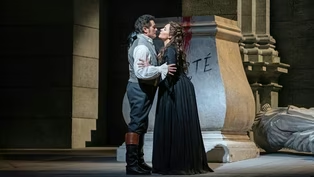
"Great Performances at the Met: Andrea Chénier" Preview
Video has Closed Captions
Preview: S53 Ep22 | 30s | Giordano’s tragedy stars tenor Piotr Beczała. (30s)
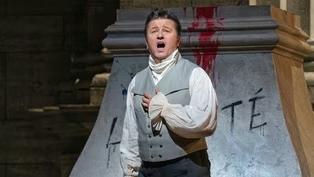
Piotr Beczała in Andrea Chénier: “Come un bel dì di maggio”
Video has Closed Captions
Clip: S53 Ep22 | 1m 6s | Sentenced to death during the French Revolution, Andrea Chénier (Piotr Beczała) performs one last po (1m 6s)
Providing Support for PBS.org
Learn Moreabout PBS online sponsorship

- Arts and Music
The Best of the Joy of Painting with Bob Ross
A pop icon, Bob Ross offers soothing words of wisdom as he paints captivating landscapes.




 New Episode
 New Episode


Support for PBS provided by:
Major series funding for GREAT PERFORMANCES is provided by The Joseph & Robert Cornell Memorial Foundation, the Anna-Maria and Stephen Kellen Arts Fund, the LuEsther T. Mertz Charitable Trust, Sue...